
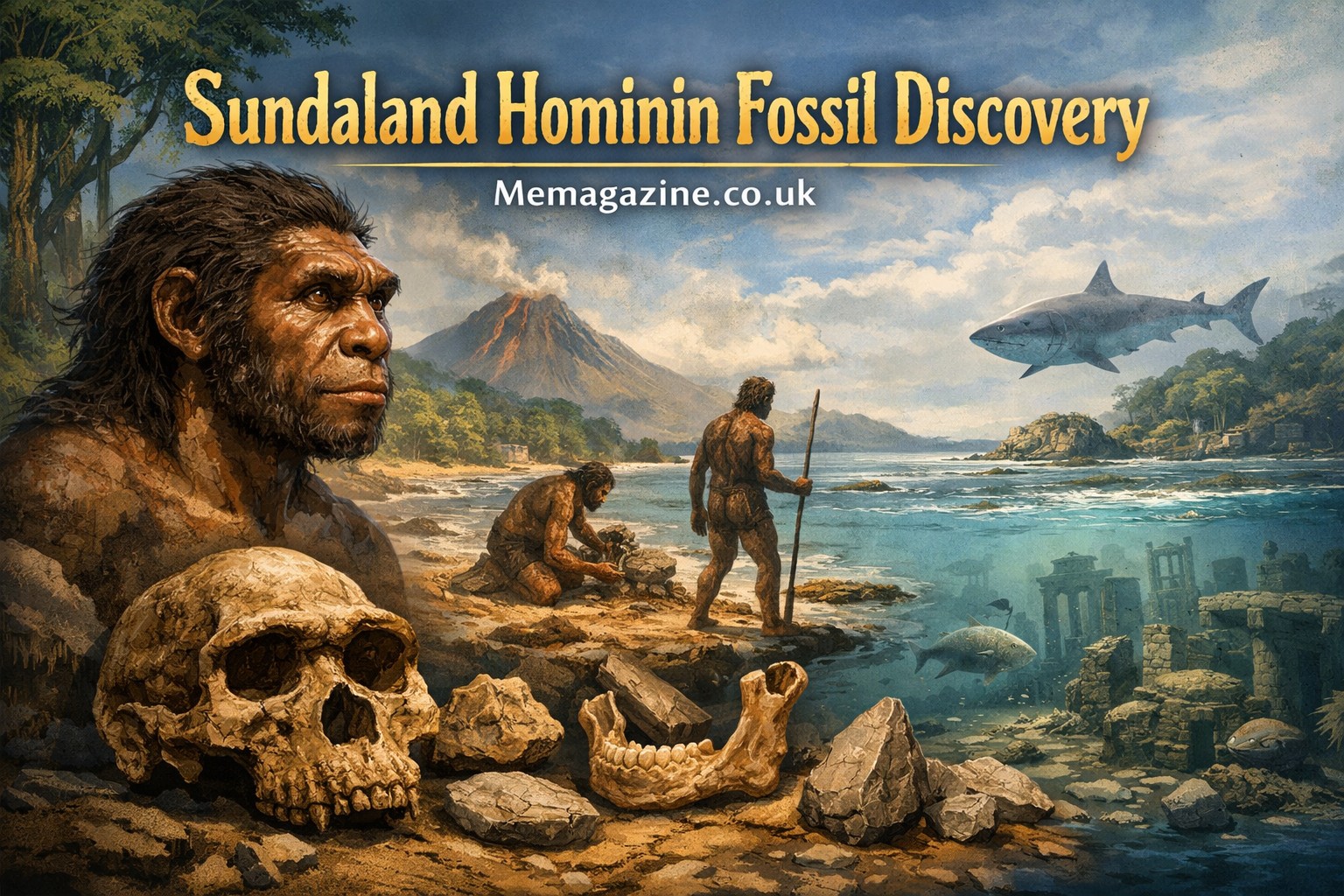
Southeast Asia has always been a treasure trove for human evolutionary research. From iconic finds like Java Man to recent revelations about early human dispersal, the region’s past is critical for understanding how our ancestors lived, migrated, and adapted. In a groundbreaking development, archaeologists have now recovered the first hominin fossils from a submerged landscape known as Sundaland, fundamentally expanding our knowledge of early humans in Asia and offering a rare glimpse into prehistoric life beneath the waves.
Introduction to Sundaland and Pleistocene Hominins
The Pleistocene Epoch and Human Ancestors
The Pleistocene Epoch, spanning roughly from 2.6 million to 11,700 years ago, was a period of dramatic climate change and the evolution of many hominin species—including Homo erectus, Homo floresiensis, Homo luzonensis, Denisovans, and eventually Homo sapiens. These species evolved under shifting environments and fluctuating sea levels, moving across continents and island landscapes in search of resources.
What Made Sundaland Special
The region now submerged beneath parts of the Indian Ocean and the South China Sea was once Sundaland—an extensive landmass exposed during periods of low sea level in the Pleistocene. Covering what is now Indonesia’s Sunda Shelf, this land connected major islands like Java, Sumatra, Borneo, and Bali to the Asian mainland, creating vast plains, river systems, and habitats rich in biodiversity.
Despite its importance in human and animal evolution, much of Sundaland’s fossil record remained inaccessible because it is now underwater—until this landmark discovery.
The Geography and History of Sundaland
Sunda Shelf: A Submerged Supercontinent
The Sunda Shelf is among the world’s largest submerged continental shelves, extending off the coasts of Southeast Asia and lying mostly underwater today. During glacial periods, especially between 140,000 and 20,000 years ago, sea levels dropped significantly—by as much as 100 meters—exposing land that connected islands and provided corridors for animal and human movement.
How Sea-Level Changes Shaped Human Habitats
Rising and falling sea levels dramatically altered landscapes. During lowstands, Sundaland’s rivers, grasslands, and forests formed thriving ecosystems. When ice caps melted, sea levels rose, submerging these lowlands and preserving ancient landscapes beneath sediments on the seabed. This submerged terrain was largely inaccessible and invisible for decades, limiting our understanding of prehistoric life in much of Southeast Asia—until now.
The Discovery of Hominin Fossils in Sundaland
Accidental Archaeology: From Dredging to Breakthrough
The fossil discovery began not with a deliberate excavation, but during marine sand dredging operations in the Madura Strait, off the northeast coast of Java, Indonesia. Sand extraction activities between 2014 and 2015 unexpectedly brought up rich fossiliferous deposits being used to fill land for construction. Among more than 6,000 vertebrate fossils were the first hominin remains ever recovered from submerged Sundaland—specifically, fragments belonging to Homo erectus.
This remarkable find was documented in multiple scientific papers, including in the peer‑reviewed journal Quaternary Environments and Humans in 2025.
Fossils Found and Their Significance
Human Fossils: A Frontal and Parietal Fragment
The two hominin fossils identified from the Madura Strait comprise a frontal bone fragment and a parietal bone fragment. Analysis indicates they belong to Homo erectus, a species that inhabited Southeast Asia and other parts of the Old World for hundreds of thousands of years. These fragments were discovered within the sandy fill of a submerged river valley of the Solo River, which once flowed across what is now the ocean floor.
Dating and Environmental Context
Optically Stimulated Luminescence (OSL) dating of associated sediments places these fossils at roughly 162,000 to 119,000 years old, linking them to Marine Isotope Stage 6 (MIS6)—a colder period during the late Middle Pleistocene when sea levels were significantly lower.
This dating suggests that Homo erectus populations migrated beyond Java and into the wider expanse of Sundaland, following waterways and inhabiting lowland habitats that were once rich and extensive.
Vertebrate Fossils: Reconstructing Ancient Ecosystems
The hominin fragments were part of a broader paleontological assemblage that included vertebrate remains from at least 36 species, including elephants, bovids (cow‑like animals), rhinos, Komodo dragon ancestors, and freshwater fish. These fossils paint a vivid picture of Sundaland as a biodiverse Pleistocene ecosystem with abundant terrestrial and aquatic life.
Cut marks on turtle bones and broken bovid bones found at the site provide evidence that Homo erectus engaged in hunting and bone marrow extraction, offering unprecedented insight into their subsistence behaviors.
Techniques in Underwater Archaeology
Recovering Fossils Beneath the Sea
Underwater archaeology in submerged regions poses unique challenges. In this case, the discovery was serendipitous, but researchers quickly recognized the significance of the finds and applied careful stratigraphic analysis and dating techniques to understand the context.
OSL Dating and Contextual Reconstruction
OSL dating measures the last time sediment grains were exposed to sunlight. By analyzing the sandy fill of the river valley on the Madura Strait seabed, scientists could confidently associate the fossil layers with specific periods of low sea level and landscape exposure, reconstructing a timeline of ancient environments on Sundaland.
Homo erectus in Sundaland: Behavior and Lifestyle
Diet and Subsistence Strategies
Despite often being stereotyped as simple tool‑users, evidence from Sundaland suggests that Homo erectus had diverse subsistence strategies. Cut marks on turtle shells and bovid bones indicate butchery and marrow consumption, which require planning and tool use—behaviors that align more closely with complex hominin foraging patterns.
Their exploitation of riverine environments—collecting shellfish, fishing, and hunting along waterways—highlights their adaptability. These behaviors may parallel practices seen in more advanced hominins, suggesting possible cultural exchanges or convergent strategies.
Movement and Dispersal Across Sundaland
Before this submerged fossil site was discovered, Homo erectus was mainly known from terrestrial sites on Java such as Trinil, Sangiran, and Ngandong. These discoveries reinforced the idea that the species may have been relatively isolated on Java for extended periods.
The Sundaland fossils suggest a broader geographic range, showing that H. erectus populations used rivers and plain landscapes across the wider Sundaland region—indicating connectivity and mobility that were previously undocumented.
Insular Dwarfism and Hominin Evolution in Southeast Asia
One intriguing evolutionary trend in Southeast Asia is insular dwarfism, where species evolve smaller body sizes in response to island environments. This phenomenon helps explain species like Homo floresiensis and Homo luzonensis, both diminutive hominin species found on Flores and Luzon islands respectively.
While the submerged Sundaland fossils are Homo erectus rather than dwarf species, their location in a diverse and isolated region underscores the complexity of hominin evolution in island and near‑island contexts, where geography and resource availability shaped evolutionary paths.
Sundaland’s Prehistoric Ecosystem
Landscape and Climate
During the Pleistocene, Sundaland was not a barren land. Instead, it was a vast plain with grasslands, river networks, forests, and floodplains comparable to parts of Africa’s savannahs. This landscape sustained large mammals, reptiles such as river sharks, and a variety of hominins.
River systems like the ancient courses of the Solo River provided water, food resources, and mobility corridors for both animals and hominins. The sheltered environment near rivers would have supported year‑round habitation and broader ecological niches for species adaptation.
Megafauna of Sundaland
Fossils of elephants, rhinos, hippos, and bovids found alongside hominin remains reveal a rich megafaunal community. Some species are now extinct or restricted to smaller ranges. For example, river sharks and large bovids thrived in the freshwater environments that have now vanished beneath the sea.
Implications of the Discovery
Rewriting Human Prehistory in Southeast Asia
The discovery of submerged hominin fossils dramatically expands what we know about human evolution in Asia. It demonstrates that Sundaland was not a peripheral fringe but a central habitat for Homo erectus and possibly other hominins, revealing new migration pathways and ecological adaptations.
Human Migration and Geographic Connectivity
The finds challenge earlier models that portrayed H. erectus as a Java‑bound, somewhat isolated population. Instead, these fossils indicate that Homo erectus populations dispersed across the lowland plains of Sundaland, likely following major waterways and exploiting seasonal environments across what is now the seabed.
Biodiversity and Ecological Insights
Besides human evolution, this discovery adds to understanding of regional biodiversity during the Pleistocene. Knowing which animals coexisted with hominins helps paleoecologists reconstruct food webs, climate conditions, and ecological resilience—valuable for both evolutionary biology and conservation biology.
Preservation and Exhibition of Fossils
From Seabed to Museum Display
The hominin fossils and associated vertebrate remains are now housed in the Geological Museum in Bandung, Indonesia, ensuring that these invaluable records of human evolution are preserved and studied further.
Public Exhibitions and Education
Plans for museum exhibitions based on these finds aim to share this remarkable chapter of human history with broader audiences, promoting public understanding of how ancient humans lived and adapted to dramatic environmental changes.
Conclusion
The discovery of Sundaland’s hominin fossil site represents a new frontier in paleoanthropology and Southeast Asian archaeology. These submerged fossils not only extend the known geographic range of Homo erectus but also provide unprecedented insights into how early humans interacted with their environment, hunted, migrated, and adapted across dynamic landscapes now hidden beneath the sea.
By revealing a once‑vast world teeming with life and human ancestors, this discovery deepens our understanding of the human journey—one shaped as much by shifting seas as by relentless curiosity and adaptation.
ALSO READ: Protocolo Operacional Padrão (POP): O que é, como fazer e exemplos práticos