Agrisolar has moved from a niche research topic to a recurring line on major industry calendars. In 2026 alone, agrisolar-focused gatherings are being held in New Delhi, Paris, Munich and Stuttgart, each drawing a different segment of the value chain: regulators, developers, financiers and farmers. Read side by side, these events form a fuller picture of the sector than any single agenda can offer. This article looks at what four separate 2026 agrisolar conferences are actually discussing and what that convergence signals for anyone deciding where to focus next.
A Crowded 2026 Calendar, but Not a Repetitive One
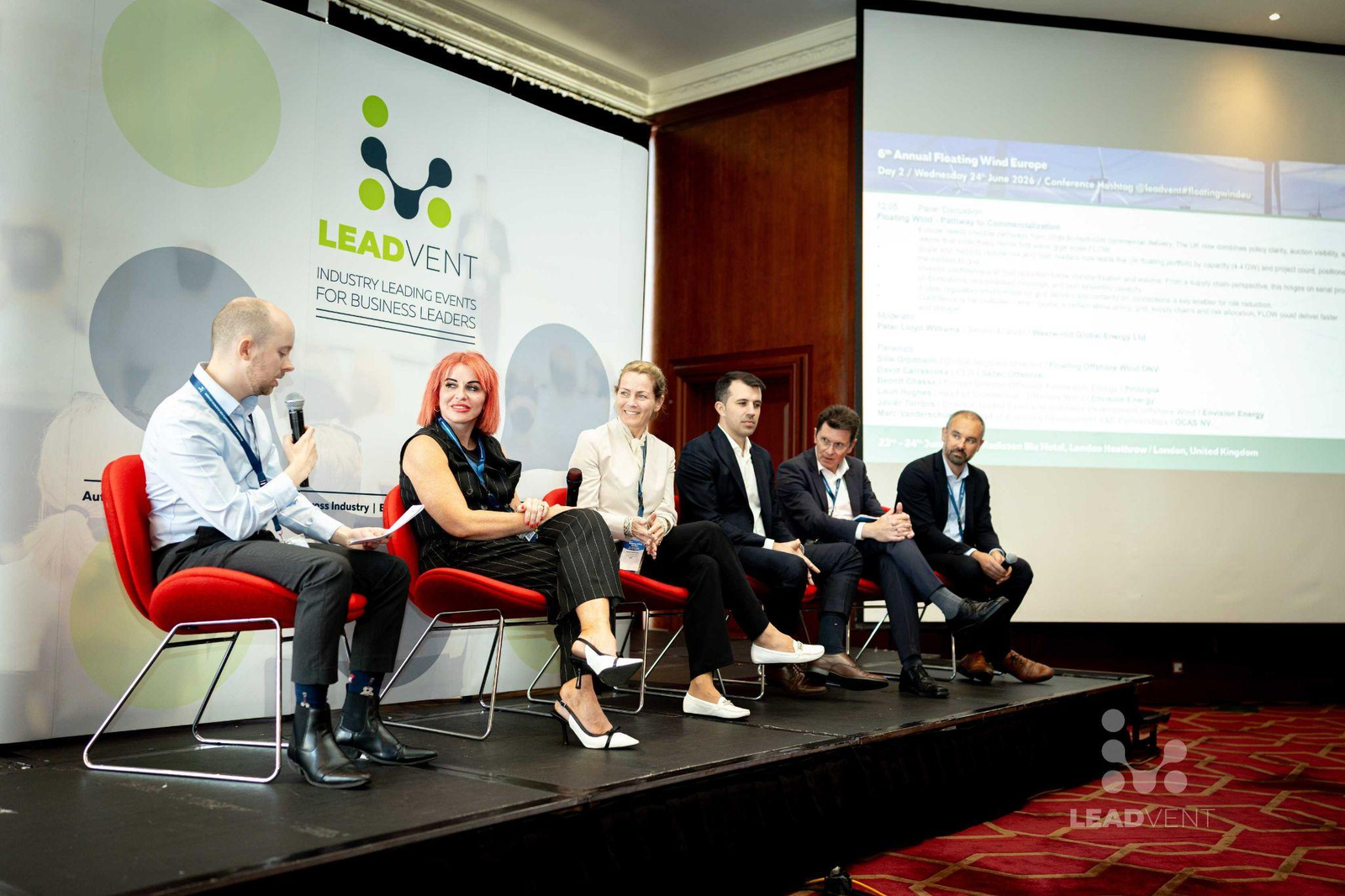
The 7th AgriVoltaics World Conference takes place in New Delhi from 21–23 October 2026, hosted by India’s Ministry of New and Renewable Energy and expected to draw more than 1,000 participants under the theme “Powering the Global South.” In Paris, the Solarplaza Summit Agri-PV Europe focused the conversation on standardisation and bankability, framing 2026 as Europe’s shift from pilot projects to investment-ready infrastructure. Munich’s Intersolar Europe gave agricultural PV a dedicated track this year, with around 70 of its 1,450 exhibitors showcasing agrisolar products. Leadvent’s own 5th Annual AgriVoltaics Europe, running 17–19 November 2026 in Stuttgart, sits at the close of this circuit.
According to Intersolar Europe, roughly 70 of its 1,450 exhibitors in 2025 were showcasing agricultural PV products and solutions, with agrisolar sessions added to the main conference programme for the first time.
None of these four events cover the same ground in the same way, and that is the point worth noting. Delhi is organised around access and technology transfer to the Global South, and it deliberately convenes farmers, start-ups, financing institutes, state agencies and research bodies in the same sessions rather than separating them by role. Paris was built around financing and standards, aimed squarely at developers and lenders. Munich sits inside a broader solar power conference, giving agrisolar a technical, product-led audience shaped by the wider photovoltaics trade show around it. Stuttgart, by contrast, is structured as a smaller, senior-level forum, bringing developers, legal experts, financiers and farmers into the same room for direct exchange rather than exhibition-floor browsing.
Every Solar Power Conference Is Now Asking the Same Three Questions
Despite the differing formats, the substance converges.
1. How do we reconcile fragmented permitting rules?
Italy’s Agriculture Decree requires at least 70% of surface area to remain available for farming and caps PV coverage at 40%; France applies a 40% ground coverage ratio above 10 MW with a 4-metre height threshold; Germany’s Solarpaket I created dedicated Agri-PV auction capacity of 800 MW for 2025 and 1,200 MW for 2026, pending European Commission state-aid approval. Developers moving between these markets are effectively designing three different systems for what is nominally the same technology.
2. Is agrisolar bankable yet?
In May 2026, German developer Feldwerke secured a €12 million revolving credit facility for a 100 MW Agri-PV rollout, a signal that institutional lenders are beginning to treat the Agri-PV incentive stack as a stable basis for lending rather than a policy experiment. Third: what does the agricultural evidence actually show? A 2026 University of Illinois study published in the Proceedings of the National Academy of Sciences found that agrivoltaics can raise or lower both yield and profit depending on the crop and region, cutting against the assumption that agrisolar is a universal win for farmers. A separate University of Minnesota study on dairy grazing systems found that forage quality can be maintained, or even improved, under agrisolar arrays, extending the evidence base beyond crops into livestock systems.
Why the Renewable Energy Summit Format Matters for Agrisolar Specifically
Agrisolar sits at the intersection of two industries that do not naturally share a vocabulary: energy developers and working farmers. A large renewable energy summit built around exhibition halls is well suited to showcasing hardware, but it is a harder environment for the kind of structured, cross-sector negotiation that permitting reform, financing structures and crop-yield data actually require. Smaller, curated formats, with named speakers, defined agenda themes and space for direct follow-up conversations, tend to produce more of the peer exchange this sector currently needs, precisely because the audience is self-selected around a shared, technical problem rather than a shared industry badge.
This distinction matters more for investors and legal advisers than it might first appear. A regulatory lawyer trying to compare France’s height thresholds against Italy’s coverage limits, or a project finance director assessing how the Feldwerke facility might translate to a different jurisdiction, gets more value from ninety minutes of direct discussion with counterparts than from a day spent walking an exhibition floor. The 2026 calendar reflects this: alongside the larger trade-show-adjacent events, a growing number of agrisolar gatherings are deliberately capping attendance and prioritising senior-level access over headline footfall numbers.
The Throughline: Agrisolar’s Open Questions Are Converging Worldwide
What Delhi, Paris, Munich and Stuttgart share in 2026 is not a single agenda but a common set of unresolved questions: how permitting can be harmonised without slowing deployment, how lenders price a still-young asset class, and how agricultural outcomes are measured and reported honestly. A newly launched African Agrivoltaics Platform Initiative, introduced in Paris in April 2026, extends this same set of questions into a fifth geography, pointing to a market still forming its basic financing and pipeline infrastructure. Attending one event no longer gives a complete view of any of these debates. Tracking how the same questions surface across each one is closer to what serious market participants now need to understand where the sector is actually headed.
Frequently Asked Questions
1. What Is the Difference Between Agrisolar and Agrivoltaics?
The terms are used interchangeably across the industry. “Agrivoltaics” is more common in European and academic contexts, while “agrisolar” and “agri-PV” appear frequently in North American and industry-association usage. All three refer to the same practice: combining solar photovoltaic generation with active agricultural or grazing land use on the same site.
2. Which Regions Are Leading Agrisolar Deployment in 2026?
Europe and Asia currently lead installed Agri-PV capacity, supported by incentive-based policies and national auction schemes. Within Europe, Italy, France and Germany have each introduced distinct regulatory frameworks in 2026, while the newly launched African Agrivoltaics Platform Initiative is working to build project pipelines and financing access across African markets.
3. What Topics Dominate Agrisolar Conference Agendas This Year?
Across the 2026 circuit, four themes recur: permitting and land-use regulation, project financing and bankability, agricultural yield and livestock research, and system design for specific crop or grazing types. Financing and regulation dominate developer- and investor-facing events, while yield and design topics feature more heavily at research-oriented conferences.
Leadvent Group’s own contribution to this circuit is the 5th Annual AgriVoltaics Europe, a hybrid event held on 17–19 November 2026 in Stuttgart, Germany. It brings together 35+ speakers, 250+ attendees and 10+ sponsors from across the developer, legal, financial and farming community for senior-level discussion of the permitting, financing and land-use questions raised throughout this article.